

The application deadline for the current round of funding is October 15. The application consists of three parts: a research proposal (approximately 3 pages long) by the student applicant, a letter of recommendation from the student’s mentor, and a liability waiver signed by a representative of the student’s school. The application must be emailed as a PDF file to marjotfoundation@gmail.com with the subject “Marjot Application” plus a hard copy must be mailed to the Foundation. Finalists are also required to complete a 20 minute interview video call with the Marjot Science Board before they are eligible to receive the grant.
Once complete, hard copies may be mailed to:
The Marjot Foundation
PO Box 803
Falmouth, MA 02541
What makes a good proposal?
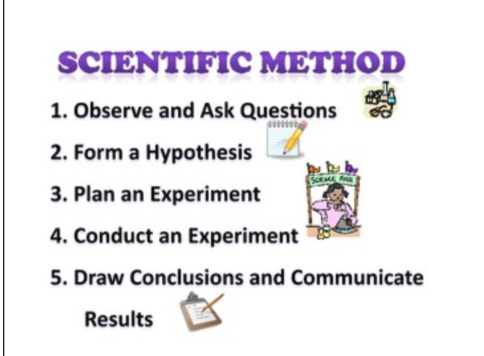
Students should consider the scientific method as well as the following questions when writing their proposals:
What question do you want to answer?
What hypothesis do you want to test?
Why do you think the research is important?
How is your research unique?
What supplies will you need?
Where and when will you do the research?
How will you evaluate your data?
We realize that many students do not have grant-writing experience and will gladly provide assistance with the application process when necessary. Please email marjotfoundation@gmail.com before October 15 if you have any questions. Two research proposals that were funded in years past by the Marjot Foundation can be found below to give students a sense of what makes a successful proposal.
» Sample Research Proposal 1
» Sample Research Proposal 2
The Research Proposal
A template of the application form is available here for students to use.
The Research Proposal includes these sections:
Introduction - The introduction will outline what the student(s) want to study, why, and what results are expected.
Goal
Hypothesis
Significance
Methodology - The methodology section will outline how the student(s) will complete the study and address practical details.
Site
Test Plan
Schedule
Analysis - The analysis section will outline how the student(s) will process the data and determine if the outcome supports the hypothesis.
Budget - The budget proposal will outline how the student(s) might spend the grant allotment of $2500 dedicated to supplies. This budget proposal will help demonstrate the feasibility of the project within the budgetary constraints of the grant.
References
AI Acknowledgement - Marjot requires applicants to cite AI-generated content. Generative AI is a useful tool, but would like to remind applicants that, as the author, you are responsible for everything you create. If an AI is used to generate ideas, write or edit text, or organize information, it should be acknowledged here. If Generative AI is not used to help with your proposal, please include a statement saying so. Some additional information on citing AI tools is available here (https://libguides.mit.edu/cite-AI-tools)
Works Cited - Citations may be included to help show how your work is important, how your work is unique, how you could collect data, how you could process data, or any number of other things. We realize that students do not always have access to scientific papers, and we encourage students to cite publicly available scientific papers, articles by research institutes or government agencies, newspaper stories, and/or any other relevant sources.
Appendix
How did you hear about Marjot? - Please include a brief statement about how you first heard of Marjot Foundation. For example, through your science teacher, your mentor, a local nonprofit, a past Marjot recipient, etc.
Mentor
Students must identify a mentor who will supervise and actively participate in the project. The mentor may be a teacher or a scientist working in the academic or industrial sectors.
Mentors must write a letter of recommendation for the student, which will be submitted along with the research and budget proposals. The mentor’s letter of recommendation must include a statement that the mentor has read the student’s research proposal and provided feedback.
School Responsibility
A school representative must fill out this liability form.
The superintendent and/or principal of the school must agree that the work may be conducted at the school when appropriate. Furthermore, the school must assume liability for any work connected with the project; i.e. transportation to and from a research site, any injury that might occur during the research, travel to present the data, etc.
Finalist Interview
Finalists are expected to attend a 20-minute video call interview about their project with Marjot Science Committee members as part of the application process.
Project Expectations
In addition to the application, all students are expected to meet the following criteria:
Participate in a science fair during the course of their project.
Submit a mid year report to Marjot Foundation summarizing their accomplishments to date.
Submit a final report to Marjot Foundation at the end of their research that covers all the steps of the scientific method.